
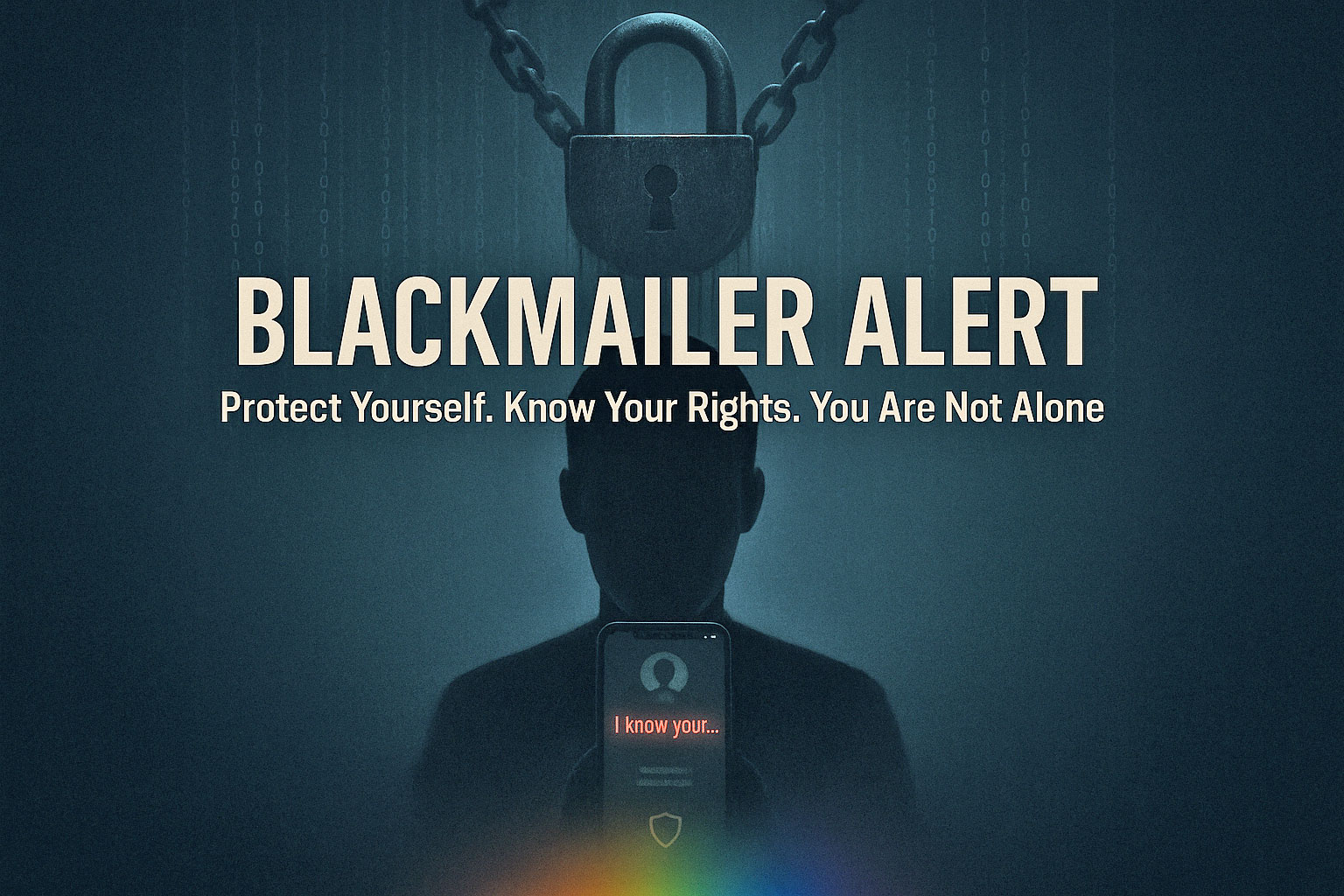
A public service advertisement warning about kito (homophobic blackmail).
COMMENTARY
By Mike Daemon
On a humid evening in southern Nigeria in August 2024, dozens of young people gathered for what they say was a birthday party. Before the candles could be blown out, security officers burst through the doors. By night’s end, more than 70 people had been arrested, accused of organizing a same-sex wedding. Some were paraded before journalists, their faces exposed to a nation that treats such accusations as a public scandal.
The scene has become familiar. In Nigeria, the mere suspicion of homosexuality can turn an ordinary gathering into a criminal case. The law allows it. Society often applauds it.
For many young Nigerians, the danger begins long before the police arrive.
The Blackmail Economy
In Nigeria’s underground queer networks, there is a word people whisper with dread. “Kito.”
It describes a trap. Someone meets a man online, often through social media or dating apps. They agree to meet. Then the ambush begins. A group appears, phones start recording, threats fly. Pay up, withdraw money, or your family will see the video.
Victims are beaten, stripped, humiliated, and forced to empty their bank accounts. Some attackers upload the footage online. Others simply keep it as insurance.
One victim told reporters he was tortured with an iron and forced to withdraw hundreds of thousands of naira from his account. Many lose jobs once the videos circulate. A few lose their lives. In 2022, one Nigerian man was murdered after a gang lured him through social media in a similar scheme.
It thrives because victims rarely report the crime. For queer people in Nigeria, going to the police can mean confessing to a crime.
The Law That Opened the Door
In 2014, Nigeria passed the Same-Sex Marriage Prohibition Act. The law bans same-sex marriage and criminalizes public displays of same-sex relationships. Conviction can mean up to fourteen years in prison.
Supporters celebrated it as a defense of culture and faith. Politicians embraced it with remarkable enthusiasm. Churches and mosques applauded from their pulpits.
But human rights groups say the law did more than criminalize relationships. The wording itself is broad. Even the “public show of same-sex affection” can lead to arrest. It created a social license to harass anyone suspected of being gay.
The non-governmental organization Human Rights Watch has reported that police officers have used it to detain people, extort money, or publicly humiliate them. In practice, suspicion is often enough.
When Suspicion Becomes a Spectacle
In 2018, police in Lagos arrested dozens of young men at a birthday party and displayed them before cameras. One of them was a dancer who insisted he had only been hired to perform. The spectacle became viral entertainment across Nigerian social media.
Public shaming is part of the process. Authorities often parade suspects before journalists.
It makes good television.
It also destroys lives.
Students are expelled from school. Workers are dismissed from jobs. Families disown their children. Once someone’s face is tied to a “homosexuality arrest,” even a dismissed court case cannot repair the damage.
Culture, Politics and the Applause of the Crowd
Nigeria’s hostility toward homosexuality sits at the intersection of religion, politics, and cultural identity. Both Christianity and Islam, the country’s dominant faiths, strongly condemn same-sex relationships. Politicians frequently present anti-gay laws as a defense against Western influence.
In a country where corruption, insecurity, and unemployment dominate daily life, few topics bring such easy applause as condemning homosexuality. It is one of the rare issues that unites Nigeria’s deeply divided political landscape.
The targets are often the most vulnerable: young people, students, unemployed urban youth navigating private identities in crowded cities where privacy barely exists.
The Quiet Cost
The cost of this hostility is rarely measured in statistics. It appears instead in quieter forms.
Young Nigerians who live double lives.
Friends who communicate only through encrypted chats.
Tenants suddenly evicted by landlords.
Students who leave university after rumors spread through dormitories.
And families who discover their child’s secret only when a video appears on WhatsApp.
For some, escape means leaving the country. For others, it means living invisibly within it.
A Country at a Crossroads
Nigeria is a nation of immense energy, creativity, and youth. Its music travels the world. Its movies fill streaming platforms. Its tech entrepreneurs build global companies from Lagos apartments.
Yet within this same society, a young person can be jailed, blackmailed, or beaten for who they are or who someone thinks they are.
The contradiction is hard to ignore.
A country racing toward the future still spends surprising energy policing private lives.
Perhaps the real question is not whether Nigeria can enforce these laws. It clearly can.
The deeper question is whether a society that celebrates the humiliation of its own young people can truly claim victory in doing so.

COMMENTS